Player knowledge
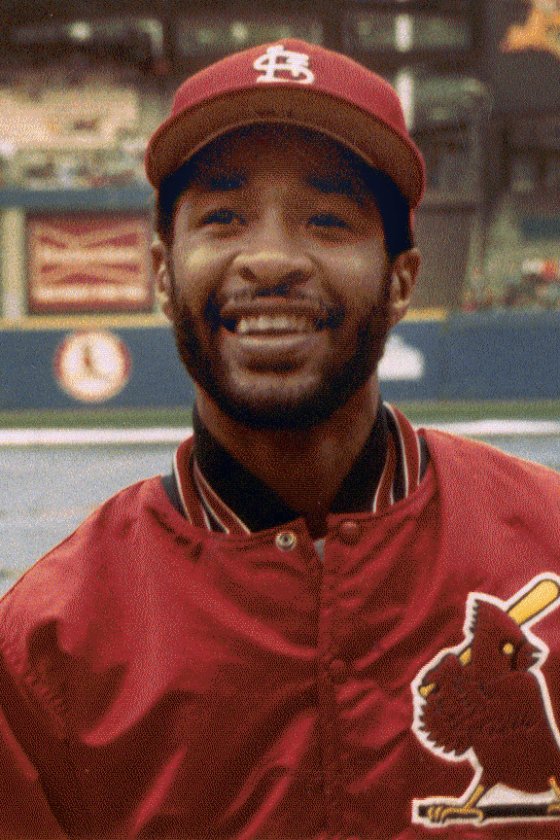
Ozzie Smith
SS 1978–1996 Hall of Fame
- Born
- December 26, 1954, in Mobile, Alabama
- Bats / Throws
- S/R
- Height / Weight
- 5'11", 150 lbs
- Hometown
- Watts (Los Angeles), California
- High School
- Locke High School
- Full Name
- Osborne Earl Smith
- Nicknames
- The Wizard of Oz, The Wizard
- MLB Debut
- April 7, 1978, at San Francisco (Candlestick Park)
- Final Game
- September 29, 1996, vs. Cincinnati
- Uniform
- No. 1 (1978–1996), retired by the Cardinals in 1996
- Gold Gloves
- 13 in a row at shortstop (1980–1992)
- Assists
- 8,375, the most by any shortstop in history
- Hall of Fame
- Class of 2002, first ballot, 91.7% of the vote
The story
Bio
Ozzie Smith turned shortstop into a show. He dove, he leaped, he caught bad hops barehanded, and on special days he trotted out to his position and did a backflip. For 19 seasons, most of them in St. Louis, balls that should have been hits simply disappeared into his glove, and a generation of fans learned to watch the shortstop first.
Osborne Earl Smith was born in Alabama, grew up in the Watts neighborhood of Los Angeles, and walked on at a college that had not recruited him. The Padres made him a big-leaguer at 23. He was a brilliant fielder who could barely hit, and a contract fight and a newspaper want ad pushed him out of San Diego. In St. Louis he won a World Series, hit the most famous home run in Busch Stadium history, and taught himself to become a .300 hitter. He won 13 straight Gold Gloves, made 15 All-Star teams, and walked into Cooperstown on his first try.
Here is the whole story, from the sandlots of Watts to the Padres, the Cardinals, and Cooperstown. When you’re done, see how much stuck with the Ozzie Smith Cardinals quiz.
Ozzie Smith
Mobile to Watts
Smith was born December 26, 1954, in Mobile, Alabama, the second of six children of Clovi and Marvella Smith. His father worked as a sandblaster at Brookley Air Force Base. When Ozzie was six, the family moved to the Watts section of Los Angeles, where Clovi drove a delivery truck for Safeway and Marvella worked as an aide at a nursing home. His mother pushed education hard and told him to chase his dreams anyway.
He built his reflexes the cheap way. He bounced a rubber ball off the concrete steps in front of the house, stepping closer each time to cut his reaction time. With friends he snuck into a neighborhood lumberyard, bounced off old inner tubes, and flipped into piles of sawdust, the first rehearsals for a famous routine. His first glove, according to one story he told, was a brown paper bag wrapped around his left hand. In August 1965, when Ozzie was 10, the Watts riots broke out, and the family slept on the floor to stay clear of stray gunfire.
His parents divorced while he was in junior high. He still found a way to Dodger Stadium, riding the bus for nearly an hour to see about 25 games a year. At Locke High School he played basketball alongside future NBA star Marques Johnson and baseball alongside future Hall of Famer Eddie Murray. Colleges did not come calling.
Ozzie Smith
Walk-On at Cal Poly
In 1974 Smith enrolled at Cal Poly San Luis Obispo on a partial academic scholarship and made the baseball team as a walk-on. Coach Berdy Harr taught the right-handed hitter to switch-hit. When the starting shortstop broke his leg midway through his freshman season, Smith took over and never gave the job back. He became an All-American and left with school records for career at-bats (754) and stolen bases (110).
In June 1976, while he was playing semipro ball in Clarinda, Iowa, the Detroit Tigers drafted him in the seventh round. Smith wanted a $10,000 signing bonus. The Tigers offered $8,500. He went back to school instead. A year later the San Diego Padres took him in the fourth round and signed him for a $5,000 bonus, and he hit .303 in 68 games for the Class A Walla Walla Padres.
Ozzie Smith
The Barehanded Rookie
Smith came to spring training in Yuma, Arizona, in 1978 as a non-roster invitee. Manager Alvin Dark told reporters the shortstop job belonged to the kid until he proved he couldn’t handle it, and even after Dark was fired in the middle of camp, Smith kept it. He debuted on April 7, 1978, batting eighth on Opening Day at Candlestick Park, and grounded into a force play against the Giants’ John Montefusco. His first hit, a single off Jim Barr, came the next day.
Two weeks later he made the play that introduced him to the country. On April 20, 1978, Atlanta’s Jeff Burroughs smacked a grounder up the middle. Smith dove to his left behind second base, and in midair the ball took a bad hop behind him. He caught it with his bare right hand, bounced up off the turf, and threw Burroughs out. Some still call it the greatest play he ever made, and he made it in his 10th big-league game.
Padres promotions director Andy Strasberg knew Smith could do backflips because he did them during warm-ups before the gates opened. He asked Smith to do one for the crowd on Fan Appreciation Day, October 1, 1978, the last home game of the season. Smith checked with veteran catcher Gene Tenace, then flipped. The fans went wild, and a trademark was born. He hit .258, stole 40 bases, and finished second in the NL Rookie of the Year voting to Atlanta’s Bob Horner. That summer, on a road trip to Houston, he also met Denise Jackson, a part-time usher at the Astrodome. They married in November 1980.
Ozzie Smith
Help Wanted in San Diego
The bat went backward in 1979. Smith started the season 0-for-32 and finished at .211 with no home runs and 27 RBI, last among qualified NL hitters in all three categories. His glove kept him in the lineup. He led the league in assists for the first of eight times.
Then came a contract fight. Before the 1980 season, talks between the Padres and Smith’s agent, Ed Gottlieb, dragged into spring training, and the club simply renewed his $72,500 salary. Gottlieb answered with a help-wanted ad in the San Diego Union: “Padre baseball player wants part-time employment to supplement income.” Joan Kroc, wife of Padres owner Ray Kroc, publicly offered Smith a job as an assistant gardener on her estate. Nobody in the front office was laughing for long.
On the field, 1980 was a revelation. Smith stole 57 bases and made 621 assists, still the single-season record for a shortstop, and won the first of his 13 consecutive Gold Gloves. In March 1981 the Yuma Daily Sun ran a feature that called him “the Wizard of Oz,” and the name stuck. Later, his Hall of Fame plaque would shorten it to simply “the Wizard.” That summer he made his first All-Star team as a reserve.
Ozzie Smith
The Trade
St. Louis had a shortstop problem of its own. On August 26, 1981, Garry Templeton, booed at Busch Stadium for not running out a ground ball, made obscene gestures at the fans, and manager Whitey Herzog had to pull him off the field. At the winter meetings Padres general manager Jack McKeon, fed up with Gottlieb, finally made Smith available, and the two clubs agreed to a six-player deal built around Templeton for Smith. It was announced on December 10, 1981.
There was a catch. Smith had a no-trade clause, and his first instinct was to use it. “This is my home,” he told reporters. So Herzog flew to San Diego over the Christmas holidays to sit down with Smith and Gottlieb. “He made me feel wanted,” Smith said later, “which was a feeling I was quickly losing from the Padres.” He agreed to go, and the Templeton-for-Smith swap was completed in February 1982. At the time, plenty of people thought San Diego won the deal. Templeton had hit .288 the year before. Smith had hit .222.
Ozzie Smith
Whiteyball and a Ring
Herzog built his teams on speed, defense, and artificial turf, a style the press called Whiteyball, and he wanted Smith to stop lifting the ball. So he made him a bet that spring: every fly ball would cost Smith a dollar, and every ground ball would cost Herzog one. By season’s end Smith had won close to $300. The Cardinals won 12 straight in April and took the NL East. “If he saved two runs a game on defense, which he did many a night,” Herzog said, “it seemed to me that was just as valuable to the team as a player who drove in two runs a game on offense.”
His son O.J., later known as Nikko, was born that April. In his first postseason, Smith went 5-for-9 as St. Louis swept the Braves in the NLCS. In the 1982 World Series against the Milwaukee Brewers he didn’t make an error, and in Game 7, with the Cardinals trailing 3–1 in the sixth, his one-out single to left started a three-run rally. St. Louis won 6–3, and Smith had his only championship ring.
Ozzie Smith
“Go Crazy, Folks!”
In January 1983 Smith signed a new contract worth $1 million a year, and that summer the fans voted him the NL’s starting shortstop in the All-Star Game for the first time. In July 1984 a pitch from his old team, the Padres, broke his wrist and cost him a month. In 1985 he hit .276, stole 31 bases, and the Cardinals won 101 games.
The NLCS against the Dodgers was tied at two games apiece when Game 5 reached the bottom of the ninth at Busch Stadium on October 14, 1985, tied 2–2. With one out, Tommy Lasorda brought in closer Tom Niedenfuer. Smith, batting left-handed, had never hit a home run from that side in nearly 3,000 big-league at-bats. He pulled an inside fastball down the right-field line, and it cleared the wall. On the Cardinals radio broadcast, Jack Buck roared, “Go crazy, folks! Go crazy!” Cardinals fans later voted it the greatest moment in Busch Stadium history. Jack Clark’s homer in Game 6 finished the Dodgers, and Smith, who hit .435, was named NLCS MVP.
The World Series against Kansas City was a different story. Smith went 2-for-23, and after umpire Don Denkinger’s disputed call at first base in Game 6, the Royals won in seven. Only later did the public learn that Smith had played the second half of the season with a torn rotator cuff. He told no one, so opponents wouldn’t run on him, skipped surgery, and rebuilt the shoulder in the weight room. To rest it, he did almost everything but throwing left-handed, from opening doors to turning on the radio.
Ozzie Smith
The Wizard Hits, Too
With his shoulder still healing, Smith let four-year-old Nikko do the traditional Opening Day backflip in 1986. On August 4 that season he made another highlight for the ages, sprinting into short left field after a Von Hayes pop fly and diving over left fielder Curt Ford to catch it while his body was parallel to the ground.
Then Herzog moved him into the No. 2 spot in the order for good, and in 1987 the “no-hit, good-field” label finally fell away. Smith hit .303, the only .300 season of his career, with 40 doubles, 104 runs, 43 steals, 75 RBI, and a .392 on-base percentage. He won the Silver Slugger at shortstop, his eighth straight Gold Glove, and more All-Star votes than anyone in baseball. He finished second in the MVP race to Andre Dawson of the last-place Cubs, largely because he and teammate Jack Clark split the first-place votes.
St. Louis beat the Giants in a seven-game NLCS, then lost a seven-game World Series to the Minnesota Twins in which the home team won every game. That winter Smith signed for $2.34 million a season, the largest contract in the National League. A sharp dresser, he landed on the cover of GQ in April 1988.
Ozzie Smith
Milestones and the Mystery Spot
The Cardinals changed around him. Owner Gussie Busch died in 1989, Herzog stepped down in 1990, and Joe Torre took over as manager. Smith kept rolling. In 1992 he stole his 500th base on April 26 and tripled at home on May 26 for his 2,000th hit. That summer he also missed two weeks with his first case of chicken pox.
That February he had turned up somewhere nobody expected: The Simpsons. In the episode “Homer at the Bat,” which aired February 20, 1992, a cartoon Ozzie voiced by the real one is recruited for Mr. Burns’s softball team, wanders into the Springfield Mystery Spot, and falls into oblivion. Smith later called it one of the highlights of his career.
He won his 13th straight Gold Glove in 1992, a run no shortstop has matched, and re-signed with St. Louis after testing free agency for the first time. The 1993 season was the only year between 1981 and 1996 that he missed the All-Star team, and shoulder surgery on May 31, 1995, cost him nearly three months. Off the field he won the Branch Rickey Award in 1994 and the Roberto Clemente Award in 1995 for his community work.
Ozzie Smith
The Last Backflip
New owners and a new manager, Tony La Russa, arrived in 1996, along with a new shortstop, Royce Clayton. La Russa promised an open competition. Smith hit .288 without an error that spring while Clayton hit .190 with eight errors, but La Russa gave Clayton most of the playing time. Smith, who also missed the first month with a hamstring injury, felt he had earned the job and was bitter about it. Rather than accept a trade, he negotiated a settlement with the club and announced on June 19, 1996, that he would retire at season’s end.
His farewell tour turned into a celebration. He got a standing ovation at the All-Star Game in Philadelphia and raised his average from .239 to .286 over the summer as St. Louis won the NL Central. On September 28, 1996, the Cardinals retired his No. 1 before a game against Cincinnati, and Smith did one of his last backflips. He played his final regular-season game the next day.
In the Division Series, St. Louis swept Smith’s first team, the Padres, a lineup led by Tony Gwynn, who had debuted in San Diego a few months after Smith was traded. Smith started Game 2 and reached base three times. The Cardinals then took a 3–1 lead over Atlanta in the NLCS before the Braves won the last three games. With St. Louis down by 10 runs in Game 7 on October 17, 1996, Smith pinch-hit and flied out to right. It was the last at-bat of his career.
Ozzie Smith
Cooperstown and Beyond
Smith replaced Mel Allen as host of This Week in Baseball in 1997, did color commentary on Cardinals telecasts, and later worked for CNN-SI. In 2001 he played the Wizard himself in the St. Louis Muny’s summer production of The Wizard of Oz.
On January 8, 2002, he learned he had been elected to the Hall of Fame on his first ballot with 91.7 percent of the vote. That same night he carried the Olympic torch through St. Louis alongside Rams quarterback Kurt Warner on its way to the Salt Lake City Games. At his induction on July 28, 2002, he framed his speech around the characters of The Wonderful Wizard of Oz, and his son Dustin presented his plaque. Two weeks later, on August 11, Cardinals fans saw a bronze statue of Smith by sculptor Harry Weber, which shows him stretched flat out above the ground to field a ball. “You spent half of your career up in the air,” Weber told him. “That makes it difficult for a sculptor to do something with it.”
After La Russa retired, Smith returned to the Cardinals as a spring training instructor in 2012. That year he also sold all 13 of his Gold Gloves at auction for more than $500,000. In 2014 he was part of the inaugural class of the Cardinals Hall of Fame. He still lives in the St. Louis area, where he remains one of the most recognizable faces in town.
Ozzie Smith
Records and Honors
- 13 consecutive Gold Gloves (1980–1992): the most ever by a shortstop
- 8,375 career assists: the most by any shortstop in history
- 621 assists in 1980: the single-season record for a shortstop
- 15 All-Star selections: 1981–1992 and 1994–1996
- 2,460 hits and 580 stolen bases over 19 seasons
- 76.9 career WAR, per Baseball-Reference
- 1982 World Series champion and 1985 NLCS MVP
- 1987 Silver Slugger and runner-up for the 1987 NL MVP
- 1994 Branch Rickey Award and 1995 Roberto Clemente Award
- National Baseball Hall of Fame, class of 2002 (first ballot, 91.7%)
- No. 1 retired by the Cardinals (1996) and inaugural class of the Cardinals Hall of Fame (2014)
Ozzie Smith
Wizard Fun Facts
- His Locke High School baseball teammates included future Hall of Famer Eddie Murray.
- He learned to switch-hit only after arriving at Cal Poly as a walk-on.
- In 1987 he drove in 75 runs without hitting a single home run.
- He finished his career with the most at-bats in major-league history without a grand slam.
- His walk-off in the 1985 NLCS was the first home run of his career from the left side of the plate, and the only postseason homer he ever hit.
- In 1986 his four-year-old son Nikko did the Opening Day backflip for him. Nikko later reached the top 10 on American Idol in 2005.
- He played the Wizard in a 2001 stage production of The Wizard of Oz at the St. Louis Muny.
- In 2012 he sold all 13 of his Gold Gloves at auction for more than $500,000.
Think you know the Wizard now? Prove it with all ten quizzes in the Ozzie Smith collection, take the Ozzie Smith Cardinals quiz, meet the Cardinals’ other franchise icon on the Stan Musial page, read about the Padres legend who followed him to San Diego on the Tony Gwynn page, or browse the full St. Louis Cardinals and San Diego Padres quiz collections.
The postseason
October Accolades
| Year | Series | Result | G | H-AB | BA | HR | RBI |
|---|---|---|---|---|---|---|---|
| 1982 | NLCS | Cardinals def. Braves, 3–0 Hit .556; his sacrifice fly in Game 1 drove in the first run of the series | 3 | 5-9 | .556 | 0 | 3 |
| 1982 | World Series | Cardinals def. Brewers, 4–3 Errorless at short; his one-out single sparked the go-ahead rally in Game 7 | 7 | 5-24 | .208 | 0 | 1 |
| 1985 | NLCS | Cardinals def. Dodgers, 4–2 NLCS MVP; his walk-off homer off Tom Niedenfuer won Game 5: “Go crazy, folks!” | 6 | 10-23 | .435 | 1 | 3 |
| 1985 | World Series | Royals def. Cardinals, 4–3 Held to 2-for-23 in the Series remembered for Don Denkinger’s Game 6 call | 7 | 2-23 | .087 | 0 | 0 |
| 1987 | NLCS | Cardinals def. Giants, 4–3 Chipped in a triple as St. Louis won the last two games at home | 7 | 5-25 | .200 | 0 | 1 |
| 1987 | World Series | Twins def. Cardinals, 4–3 The home team won all seven games, and Minnesota had four of them | 7 | 6-28 | .214 | 0 | 2 |
| 1996 | NLDS | Cardinals def. Padres, 3–0 A hit, two walks, and a run in Game 2 against his first team | 2 | 1-3 | .333 | 0 | 0 |
| 1996 | NLCS | Braves def. Cardinals, 4–3 His pinch-hit fly out in Game 7 was the last at-bat of his career | 3 | 0-9 | .000 | 0 | 0 |
| Postseason | 8 series | 42 | 34-144 | .236 | 1 | 10 | |
The clubs
Teams
-
St. Louis Cardinals
1982–1996
11 of his 13 Gold Gloves, the 1982 title, the “Go crazy, folks!” homer, and No. 1 retired
-
San Diego Padres
1978–1981
Rookie of the Year runner-up, a record 621 assists in 1980, and his first two Gold Gloves
The numbers
Season Stats
| Season | Team | League | WAR | Games | PA | AB | Runs | Hits | RBI | 2B | 3B | HR | SB | BB | BA | OBP | SLG | OPS |
|---|---|---|---|---|---|---|---|---|---|---|---|---|---|---|---|---|---|---|
| 1978 | San Diego Padres | NL | 3.3 | 159 | 668 | 590 | 69 | 152 | 46 | 17 | 6 | 1 | 40 | 47 | .258 | .311 | .312 | .623 |
| 1979 | San Diego Padres | NL | 1.6 | 156 | 649 | 587 | 77 | 124 | 27 | 18 | 6 | 0 | 28 | 37 | .211 | .260 | .262 | .522 |
| 1980 | San Diego Padres | NL | 5.1 | 158 | 712 | 609 | 67 | 140 | 35 | 18 | 5 | 0 | 57 | 71 | .230 | .313 | .276 | .589 |
| 1981 | San Diego Padres | NL | 1.0 | 110 | 507 | 450 | 53 | 100 | 21 | 11 | 2 | 0 | 22 | 41 | .222 | .294 | .256 | .549 |
| 1982 | St. Louis Cardinals | NL | 5.1 | 140 | 567 | 488 | 58 | 121 | 43 | 24 | 1 | 2 | 25 | 68 | .248 | .339 | .314 | .653 |
| 1983 | St. Louis Cardinals | NL | 3.8 | 159 | 626 | 552 | 69 | 134 | 50 | 30 | 6 | 3 | 34 | 64 | .243 | .321 | .335 | .657 |
| 1984 | St. Louis Cardinals | NL | 5.0 | 124 | 484 | 412 | 53 | 106 | 44 | 20 | 5 | 1 | 35 | 56 | .257 | .347 | .337 | .684 |
| 1985 | St. Louis Cardinals | NL | 6.4 | 158 | 615 | 537 | 70 | 148 | 54 | 22 | 3 | 6 | 31 | 65 | .276 | .355 | .361 | .716 |
| 1986 | St. Louis Cardinals | NL | 5.6 | 153 | 609 | 514 | 67 | 144 | 54 | 19 | 4 | 0 | 31 | 79 | .280 | .376 | .333 | .709 |
| 1987 | St. Louis Cardinals | NL | 6.4 | 158 | 706 | 600 | 104 | 182 | 75 | 40 | 4 | 0 | 43 | 89 | .303 | .392 | .383 | .775 |
| 1988 | St. Louis Cardinals | NL | 6.6 | 153 | 669 | 575 | 80 | 155 | 51 | 27 | 1 | 3 | 57 | 74 | .270 | .350 | .336 | .686 |
| 1989 | St. Louis Cardinals | NL | 7.3 | 155 | 664 | 593 | 82 | 162 | 50 | 30 | 8 | 2 | 29 | 55 | .273 | .335 | .361 | .696 |
| 1990 | St. Louis Cardinals | NL | 3.6 | 143 | 592 | 512 | 61 | 130 | 50 | 21 | 1 | 1 | 32 | 61 | .254 | .330 | .305 | .635 |
| 1991 | St. Louis Cardinals | NL | 5.1 | 150 | 641 | 550 | 96 | 157 | 50 | 30 | 3 | 3 | 35 | 83 | .285 | .380 | .367 | .747 |
| 1992 | St. Louis Cardinals | NL | 5.1 | 132 | 590 | 518 | 73 | 153 | 31 | 20 | 2 | 0 | 43 | 59 | .295 | .367 | .342 | .708 |
| 1993 | St. Louis Cardinals | NL | 3.1 | 141 | 603 | 545 | 75 | 157 | 53 | 22 | 6 | 1 | 21 | 43 | .288 | .337 | .356 | .693 |
| 1994 | St. Louis Cardinals | NL | 2.1 | 98 | 433 | 381 | 51 | 100 | 30 | 18 | 3 | 3 | 6 | 38 | .262 | .326 | .349 | .675 |
| 1995 | St. Louis Cardinals | NL | -0.7 | 44 | 182 | 156 | 16 | 31 | 11 | 5 | 1 | 0 | 4 | 17 | .199 | .282 | .244 | .526 |
| 1996 | St. Louis Cardinals | NL | 1.6 | 82 | 261 | 227 | 36 | 64 | 18 | 10 | 2 | 2 | 7 | 25 | .282 | .358 | .370 | .728 |
| Career | 19 seasons | NL | 77.1 | 2,573 | 10,778 | 9,396 | 1,257 | 2,460 | 793 | 402 | 69 | 28 | 580 | 1,072 | .262 | .337 | .328 | .666 |